Journeys
Oct 2026
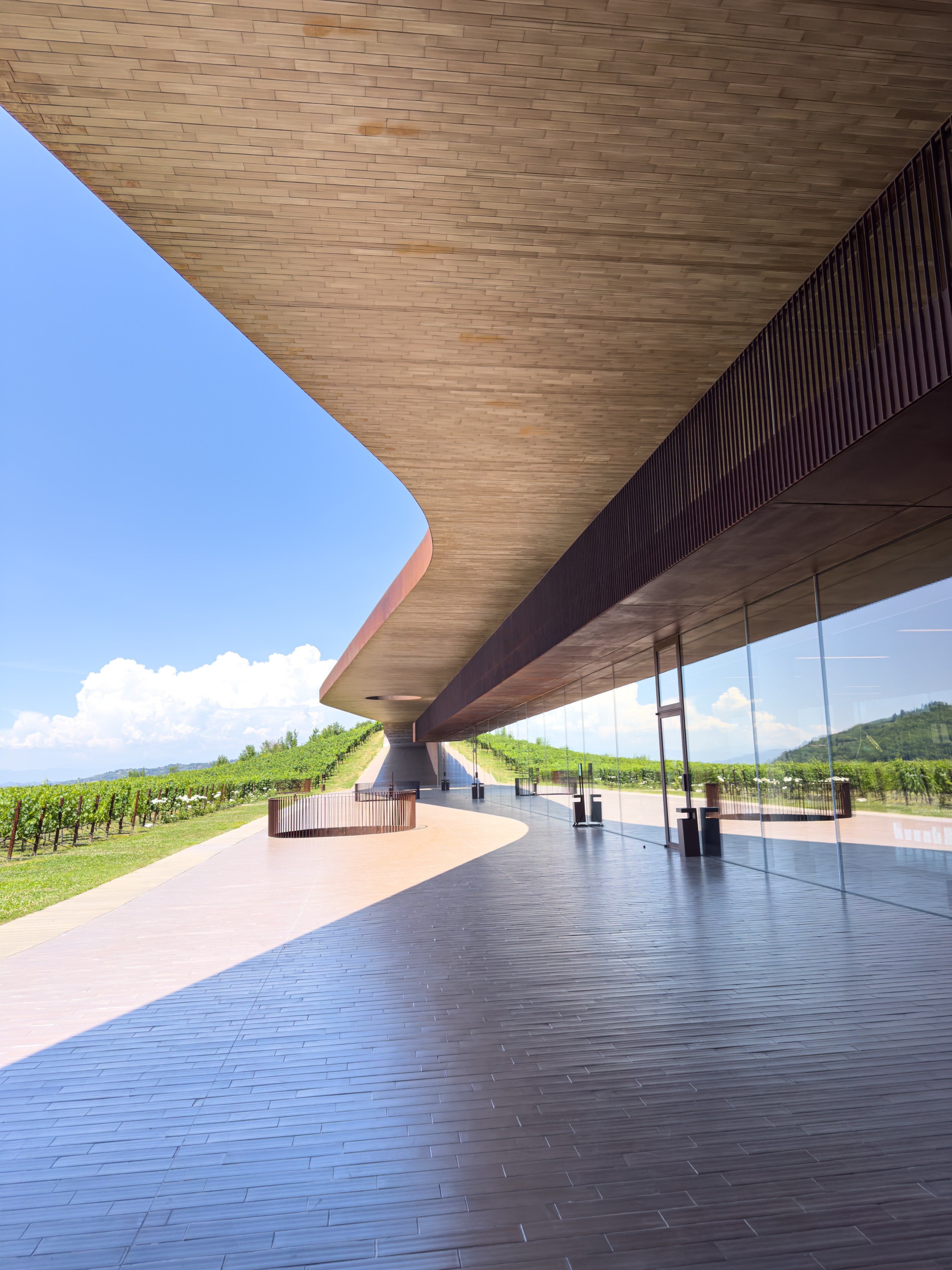
There are places where the architecture is as memorable as the experience itself. In the Tuscan countryside, surrounded by rolling hills and rows of vines, Antinori nel Chianti Classico is one of them.
At first glance, the winery feels almost unexpected against the landscape. Its sweeping lines, warm terracotta tones and dramatic spiral staircase create a striking contrast with the vineyards beyond. Yet the building does not compete with its surroundings. Instead, it draws you towards them, making the landscape an essential part of the experience.
But Antinori is about more than architecture. It is a story of wine, family heritage, craftsmanship and the pleasure of bringing people together around a table.
From the vineyards and the guided tasting to lunch at Rinuccio 1180, a visit here offers a glimpse into a distinctly Tuscan way of life, where the land, what it produces and how it is shared are inseparable.
An Architecture Rooted in the Landscape
Approaching Antinori nel Chianti Classico, the building reveals itself gradually, emerging from the hills rather than dominating them. Designed by Archea Associati, the winery is partially integrated into the hillside, with a sweeping roofline that follows the contours of the land. Vines grow across the roof, softening the boundary between architecture and landscape.
Inside, the experience becomes more dramatic. Curved forms, warm materials and the monumental spiral staircase create a dialogue between contemporary design and the natural surroundings. Openings frame the vineyards, bringing the landscape into view from different points throughout the building.
What makes the architecture compelling is not simply its visual impact, but the way it responds to its purpose. This is a working winery, designed around the production and ageing of wine, where the building and its environment are closely connected.
The result is an architectural experience that feels both distinctive and grounded in its setting. Rather than separating visitors from the landscape, Antinori continually brings their attention back to it.
A Family Legacy, Told Through Wine
Behind the striking architecture lies a history that stretches back centuries. The Antinori family has been involved in winemaking since 1385, building a legacy that spans generations while continuing to evolve.
Chianti Classico is closely associated with Sangiovese, the grape at the heart of many of Tuscany's most recognised wines. Here, tradition is not treated as something to preserve unchanged. Instead, it provides a foundation for experimentation, refinement and a continuing exploration of what the Tuscan terroir can express.
The Antinori portfolio reflects different chapters of that story. Villa Antinori represents an important part of the family's winemaking heritage, while Marchese Antinori and Tignanello are among the names associated with its exploration of Tuscan wine and its evolution.
It is a story that extends beyond any single bottle. It speaks of the relationship between a family, its land and the decisions that shape a wine over time.
Understanding that heritage adds another dimension to the visit. The vineyards outside are no longer simply a beautiful backdrop; they become part of a much longer story of cultivation, knowledge and craftsmanship.
A Guided Tasting Through the Antinori Wine Heritage
The architecture may be the first thing to capture your attention, but the guided wine tasting brings the experience back to its heart.
Seated around a table with the wines arranged alongside tasting cards and a map of Italy's wine regions, the experience becomes an introduction to the stories behind the labels. Each wine offers another perspective on the Antinori family's relationship with winemaking, the character of the region and the traditions that continue to shape its vineyards.
Among the wines represented in the tasting selection were Villa Antinori, Marchese Antinori and Tignanello, each associated with a different expression of the family's portfolio.
Having someone guide you through the selection adds a valuable dimension to the experience. Rather than simply tasting one glass after another, you have the opportunity to understand the wines in context, exploring the choices behind them and the role that grape varieties, terroir and winemaking philosophy play in their character.
A guided tasting also encourages you to slow down and pay attention. Wine becomes more than a label or a name on a menu; it becomes a way of understanding the place where it was produced and the people behind it.
For anyone interested in wine, the experience offers an opportunity to learn as well as to enjoy. And even for visitors initially drawn by the architecture or the Tuscan landscape, it provides a deeper understanding of what makes Antinori such a distinctive destination.

Rinuccio 1180: From Vineyard to Table
A visit to Antinori nel Chianti Classico would feel incomplete without experiencing its restaurant, Rinuccio 1180. Named after Rinuccio degli Antinori, an ancestor associated with the family's early history, the restaurant brings another dimension to the estate: the relationship between wine, food and the Tuscan landscape.
Lunch here offers an opportunity to experience the estate at a different pace. After exploring the architecture and discovering the wines, the focus shifts to the table, where the pleasures of the region become tangible through food and wine.
My lunch included a beautifully prepared steak, accompanied by potatoes and fresh herbs, followed by a delicately presented dessert and an espresso. The setting, with views towards the surrounding vineyards, made the meal feel like a natural continuation of the visit rather than a separate restaurant stop.
There is something particularly appealing about the way a winery can bring these experiences together. The wine is no longer simply something to taste in a glass; it becomes part of a wider conversation about ingredients, regional traditions and the pleasure of eating well.
For travellers who appreciate gastronomy as much as wine, Rinuccio 1180 is an important part of the Antinori experience. It gives you a reason to stay a little longer, enjoy the landscape and appreciate Tuscany through its food as well as its vineyards.
It is also a reminder that hospitality often lies in the relationship between different elements of an experience. The setting, the food, the wine and the time spent around the table all contribute to the memory of a place.

Beyond the Vineyard
What makes Antinori nel Chianti Classico memorable is the way its different elements come together. The architecture is striking, the wines tell a story of family and place, and the restaurant brings that story to the table.
It is a destination for those who enjoy discovering more than one aspect of a place at a time: design alongside tradition, wine alongside gastronomy, and a sense of history alongside a contemporary approach to hospitality.
For anyone exploring Tuscany, it offers a reason to look beyond the familiar itinerary of hilltop villages and scenic drives. A winery visit can become something more when it brings together architecture, heritage, gastronomy and the opportunity to understand a place through what it produces.
In Tuscany, where the landscape has long shaped how people grow, produce, cook and gather, Antinori offers an experience that feels connected to its surroundings.
You may arrive for the architecture or the wine, but the lasting impression comes from the way everything belongs to the same story.
Beyond the vineyard, it is an experience of Tuscany through its craftsmanship, its hospitality and the enduring pleasure of gathering around a table.